News
COMPARING LUDIKA TO EXISTING VIRTUAL TABLE TOP SYSTEMS
Comparing Ludika to existing Virtual Table Top systems
March 14, 2026
There are many apps catering to online board gaming. Here's how Ludika is different — and where we share common ground.
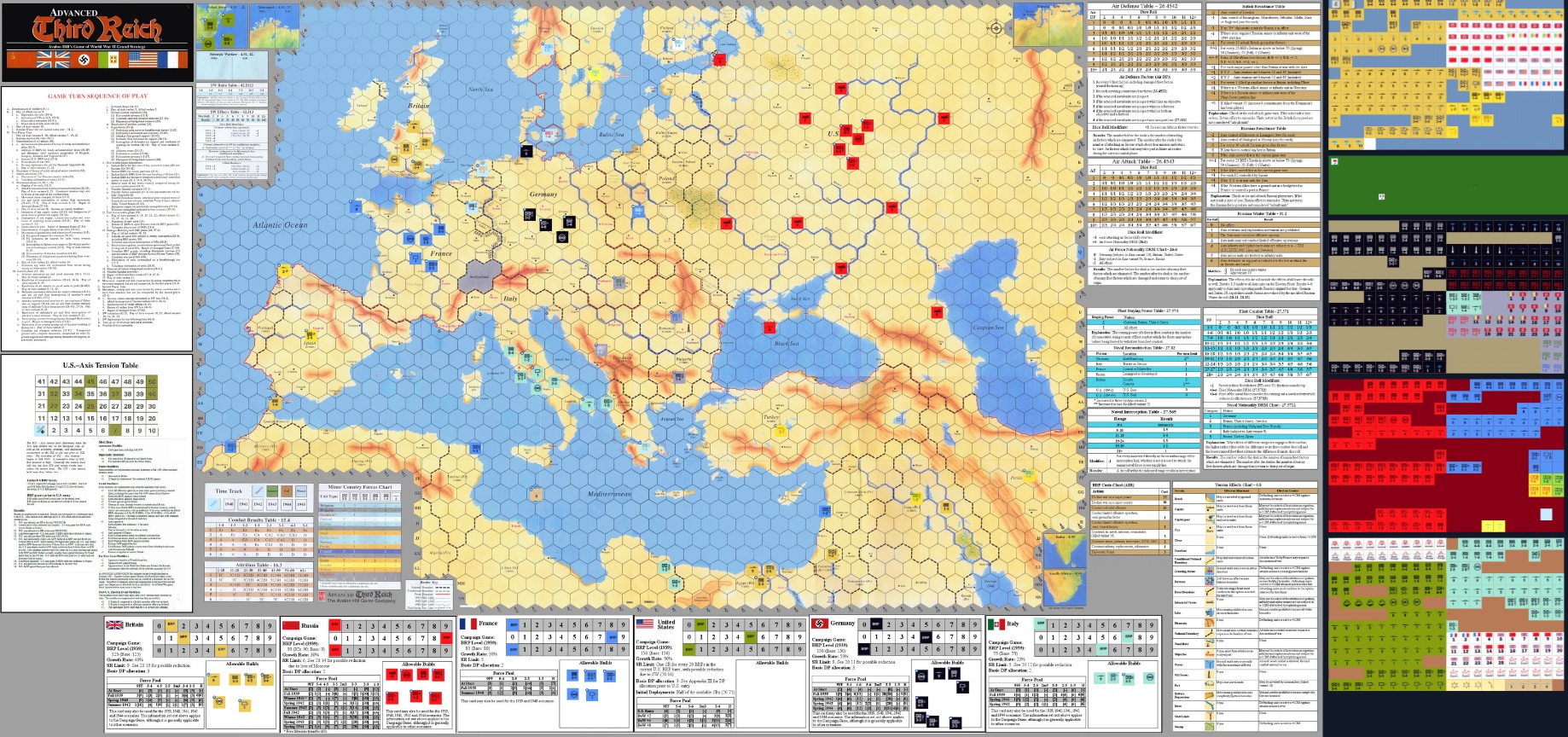
We know there are already well-established apps catering to online board gaming. Here's a brief rundown on how Ludika differs — and where we share common ground.
Compared to Tabletop Simulator (TTS)
Compared to Tabletop Simulator (TTS)
No table‑flipping. No clumsy 3D interface. No physics engine to accidentally ruin the game state. Unlike TTS, only the host needs to buy Ludika—friends can join for free with a registered account, just an email. Physics-based interaction is great for dexterity games, but Ludika focuses on strategy, clarity, and ease of play.
Compared to Board Game Arena (BGA)
Like our platform, Board Game Arena (BGA) offers online play without requiring local installation. However, BGA targets a different audience, focusing primarily on family‑friendly games that are quick to learn and fast to play. Complex strategy games are generally not supported unless they are formally implemented by a dedicated development team, as BGA enforces all game rules automatically.
Because of this full rules enforcement, game development on BGA is highly technical. Developers must be proficient in server‑side technologies such as PHP and SQL, as well as client‑side languages including HTML and JavaScript. As a result, the platform is not well suited to amateur or experimental developers.
Compared to Vassal
Ludika replaces Vassal’s dated, 1990s-style UI with a clean, modern interface that stays out of your way. Many games will be playable for free. Vassal must be installed on your PC.
If a stretch goal is met, Ludika will include Vassal module porting tools, letting creators quickly convert existing modules, then upgrade them with much higher-resolution boards and components.
If a stretch goal is met, Ludika will include Vassal module porting tools, letting creators quickly convert existing modules, then upgrade them with much higher-resolution boards and components.
Compared to Tabletopia
Like Ludika, Tabletopia avoids awkward 3D gameplay.
Ludika also supports publisher monetization, like Tabletopia, but with a larger share of revenue going directly to publishers.
Ludika also supports publisher monetization, like Tabletopia, but with a larger share of revenue going directly to publishers.
Compared to Battlegrounds Gaming Engine (BGE)
Ludika shares BGE’s focus on high-quality visuals and a minimalist UI, but without BGE’s limitations. There’s no 16‑player cap, no installation, and no port‑forwarding required.
While BGE’s offline use and one-time purchase are appealing, its outdated technology limits future growth. Ludika is built for the long term—and for reviving classic games from the 70s and 80s with modern presentation.
While BGE’s offline use and one-time purchase are appealing, its outdated technology limits future growth. Ludika is built for the long term—and for reviving classic games from the 70s and 80s with modern presentation.
Compared to ZunTzu (ZT)
ZunTzu is free, but no longer actively developed and is effectively abandonware.
If a stretch goal is met, Ludika will offer ZunTzu game box porting tools, making it easy to bring existing game boxes into a fully supported, modern platform.
If a stretch goal is met, Ludika will offer ZunTzu game box porting tools, making it easy to bring existing game boxes into a fully supported, modern platform.
Compared to BrettspielWelt
BrettspielWelt is a modern German platform for playing board games online, ranging from simple to highly complex titles. It is run as a not‑for‑profit project by volunteers. Games on BrettspielWelt must be developed in Java, which creates a very high barrier to entry for contributors.
Access to the platform is provided through a Java client, which can either run in the browser as an applet or be downloaded locally. Some parts of the interface are not fully translated from German, and because games are developed independently, there is no consistent user interface across the platform.
Compared to Yucata
Yucata is primarily oriented toward turn‑based, play‑by‑web games rather than live, real‑time play. Like BrettspielWelt, it is volunteer‑run. All games must be programmed with full rules enforcement, which typically makes development a long‑term effort.
Developing a game for Yucata is usually a multi‑month project involving JavaScript for interactivity, HTML for structure, and CSS for styling. The frontend must also be connected to a server to support asynchronous turn‑based play, using mechanisms such as signaling servers or peer‑to‑peer communication.
In summary: Ludika keeps the best aspects of existing board gaming VTTs, throws out the worst, and provides a strong foundation to grow from in the coming years. It is also highly adaptable to new requests, for instance for working with game publishers.